Quick Answer
Retail video analytics India systems detect theft patterns, billing fraud, unauthorized zone access via retail video analytics India, and loss-prevention events on existing CCTV infrastructure via retail video analytics India — in real time — a core strength of retail video analytics India — without adding manpower. Leading retail video analytics India chains are cutting shrinkage by 30–40% within 60–90 days of retail video analytics India deployment on their existing camera estate, with zero hardware replacement required — making retail video analytics India deployments highly cost-effective.
30–40%
Shrinkage reduction in 90 days
<10 Days
Go-live on existing store CCTV
5
Real-time LP detection signals
Zero
New cameras or IT overhaul needed
Why 2026 Is the Year Indian Retail Closes the Shrinkage Gap
Indian retailers without retail video analytics India lose between 1.2% and 2.5% of annual revenue to shrinkage — a figure that compounds silently across every store in the network. For a chain running 100 stores at ₹2 crore monthly revenue per outlet, that is ₹24–50 lakh in losses every month that never appears as a line item on the marketing dashboard.
The loss is distributed: some is internal theft, some is external shoplifting, some is billing error, and some is inventory variance that never gets traced back to a specific event. Traditional loss prevention tools — floor walkers, spot audits, exception-based POS reporting — catch the visible fraction. The majority is invisible until the quarter-end inventory write-off arrives.
What changed in 2025–26 is the deployment model. AI video analytics no longer requires a server room, a rip-and-replace of the camera estate, or a dedicated IT migration project. It runs on the cameras already mounted in your stores, via an on-site edge box, and goes live in under ten days. The economics of real-time LP are now accessible to any Indian retailer — and the core use case for retail video analytics India — operating more than five outlets.
What AI Video Analytics Actually Does for Retail Loss Prevention
Retail video analytics is not a smarter NVR. A legacy CCTV stack records footage. Real retail video analytics india turns that footage into actionable evidence — detecting events as they happen, routing the right alert to the right person, and logging every step into a tamper-evident record.
What it is not: a post-incident review tool. The shift from “review footage after a loss” to “detect the event before the transaction closes” is the operative change. An LP supervisor watching a WhatsApp alert with a timestamped footage clip at the moment of the event has a fundamentally different intervention capability than one reviewing 8 hours of recording the following morning.
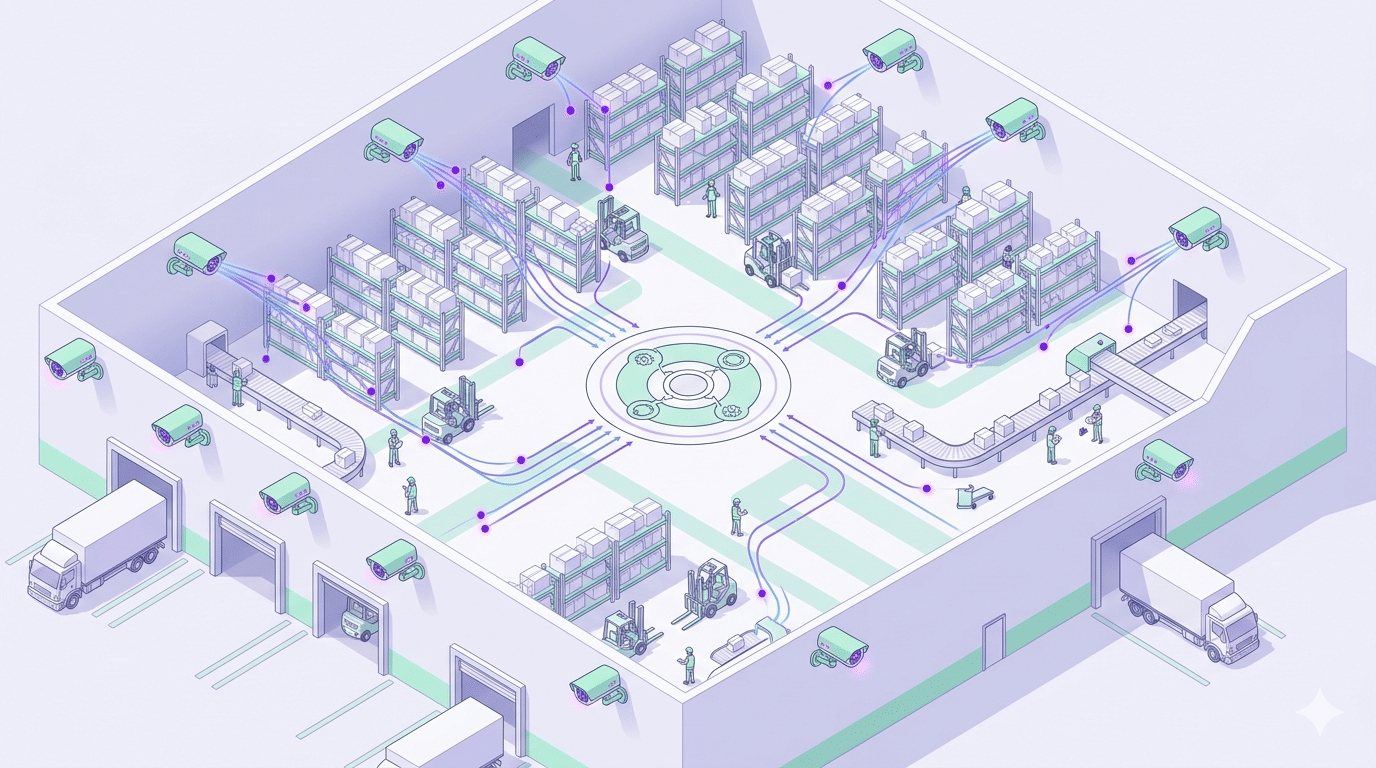
The platform runs on existing IP cameras via RTSP/ONVIF — the same protocol your current NVR uses. No new hardware, no cloud egress of customer footage, no VLAN change for IT. (For the broader cross-industry framing, our 2026 guide on top video analytics companies in India covers the same architecture pattern.)
5 Shrinkage Signals AI Cameras Detect in Real Time
Use this as your shortlist filter. If a vendor cannot demonstrate all five inside an actual Indian retail store, they are selling a dashboard — not a real retail video analytics India solution.
Capability 1 — Sweethearting Detection
The AI flags when a cashier repeatedly scans the same item, skips items in the scan sequence, or covers barcodes during checkout. Alert goes to the LP supervisor — using the retail video analytics India alert system — with a timestamped footage clip at the moment of the transaction — not in a Monday morning exception report. Detection works on existing checkout-zone cameras — a hallmark of effective retail video analytics India — without any POS hardware integration required.
Capability 2 — Blind-Spot Dwell Anomaly
Merchandise in areas with poor sightlines shows elevated individual dwell time that the system correlates against zone traffic norms. When a person dwells significantly longer than the zone average and then moves toward an exit or non-checkout zone, the LP team receives an alert with location and footage. The model learns your store layout within the first two weeks of deployment.
Capability 3 — Fitting Room Item Count Discrepancy
Items carried into a fitting room versus items carried out are tracked by count — not by identity or facial recognition. When the ratio exceeds a configurable threshold, the LP team is alerted in real time. No biometric data is stored. Privacy compliance is built into the detection architecture by default.
Capability 4 — Tag Removal Pattern Detection
Trained models detect the physical motion signature of tag removal at shelf level or in non-checkout zones. The detection is posture and motion based — it does not require high-resolution close-up cameras. Stores running standard 2MP ceiling-mounted cameras at typical retail heights are sufficient for this model to run accurately.
Capability 5 — After-Hours Restricted Zone Access
Stockroom, back office, and cash-handling zones trigger an immediate alert when accessed outside authorized hours or by unauthorized individuals during operating hours. Alert routes simultaneously to the store manager and security head with a footage clip and GPS-accurate zone identifier — within seconds of the access event.
Retail LP Walk-Through vs. AI Video Analytics — Side by Side
The LP walk-through model collapses at scale. Past 50 outlets it becomes statistical sampling. Past 200 outlets it becomes theatre. The shift is from sample-based assurance to camera-based evidence — continuous, logged, and exportable.
| Dimension | Manual LP / Floor Walks | AIVIS Video Analytics |
|---|---|---|
| Coverage | 2–3 walks per shift per zone | 24/7 on every camera |
| Incident detection | Post-event review | Real-time alert |
| Evidence quality | Verbal / handwritten report | Timestamped footage clip |
| Shrinkage traceability | Quarterly inventory variance | Event-level, POS-correlated |
| Scaling cost | Linear — more stores, more LP staff | Fixed per site, replicated per outlet |
| FSSAI / brand audit trail | 3 people, 1 weekend | Dashboard export in minutes |
| Multi-store rollout | Requires proportional headcount | Same architecture, replicated per site |
How AIVIS Deploys on Your Existing Retail CCTV
No rip-and-replace. The deployment model is an on-site edge AI box connected to the store’s existing IP cameras via RTSP/ONVIF. No server room is needed, no customer footage leaves the premises via cloud egress, and no VLAN change is required by IT. A standard 40-camera store goes live in under 10 days.
The same edge box runs loss prevention models alongside queue analytics, footfall counting, and gender distribution — so the LP investment also serves the visual merchandising and operations teams. One platform, one camera layer, multiple business functions.
Custom LP models can be trained on store-specific scenarios in days. If a particular shelf configuration, checkout layout, or known blind spot is flagged by your LP team, AIVIS calibrates a specific detection model within the same deployment cycle — without waiting for a vendor software release. For cross-vertical context, see how the same edge architecture powers our QSR video analytics deployments.
The Shrinkage ROI Math — How Retail Video Analytics Pays Back
For a store running ₹2 crore monthly revenue with 1.5% shrinkage (₹3 lakh/month loss), a verified 35% shrinkage reduction generates ₹1.05 lakh/month in recovered revenue per outlet. Across a 50-store network, that is ₹52.5 lakh per month. Platform cost per outlet at that network size typically pays back within 60–90 days at that shrinkage rate — covered by the lift in same-store gross margin, not a separate budget line.
The secondary ROI is LP headcount reallocation. Stores running AIVIS do not need to proportionally scale their LP team as the network grows. The same number of LP supervisors can cover a significantly larger store base because the AI surfaces only the events that require human judgment — not the full footage review backlog.
Frequently Asked Questions
What is retail shrinkage and how does AI video analytics reduce it?
Retail shrinkage is the gap between recorded inventory and actual inventory — caused by theft, billing fraud, vendor fraud, and administrative error. AI video analytics reduces shrinkage by detecting theft patterns, billing anomalies, and unauthorized access in real time rather than surfacing them in a quarterly inventory count or post-incident review.
Does AI video analytics for loss prevention require new cameras?
No. AIVIS deploys on existing IP cameras via an on-site edge box. Most Indian retail stores deploying retail video analytics India with standard CCTV infrastructure — including cameras from Hikvision, Dahua, Axis, and CP Plus — can go live within 10 days without replacing cameras, changing their NVR, or modifying their IT network setup.
How does retail AI video analytics handle customer privacy?
AIVIS runs anonymized behavioral detection — it identifies patterns such as dwell time, motion signatures, and zone access without storing identifiable biometric data. Facial recognition is disabled by default and is only enabled when explicitly configured by the retailer and legally cleared under applicable Indian data protection requirements.
Can AI loss prevention tools integrate with POS systems?
Yes. AIVIS correlates video events with POS transaction logs. A checkout anomaly detected by the camera is cross-referenced with the transaction record at that lane at that timestamp — creating a corroborated evidence trail for LP investigations that holds up to internal audit and external brand audit review.
What is the ROI timeline for AI video analytics in retail loss prevention?
For a store with ₹2 crore monthly revenue and 1.5% shrinkage, a 35% shrinkage reduction generates ₹1.05 lakh per month per outlet in recovered revenue. At typical platform pricing for a 40-camera store, the deployment pays back within 60–90 days — without requiring any increase in LP headcount.
Which Indian retail formats does AIVIS support?
AIVIS supports all major Indian retail formats: department stores, fashion and apparel, electronics and durables, grocery and supermarkets, QSR and food service, and banking branches. The platform runs 200+ pre-trained models and supports custom model training for store-specific scenarios within days of deployment.
See AIVIS Retail Loss Prevention in Action
Get a personalized demo of AI video analytics for your store network — running on your existing cameras powered by retail video analytics India, live in under 10 days.

Case Study: 38-Store Indian Apparel Chain Cuts Shrinkage 34% with Retail Video Analytics India
A mid-tier apparel retailer operating 38 stores across Maharashtra and Gujarat deployed retail video analytics India on their existing IP camera network in Q3 2025. Before deployment, the chain reported shrinkage at 1.85% of revenue — above the national average — with no visibility into whether losses clustered at billing counters, fitting rooms, or back-of-store zones. Operations teams were reviewing footage reactively, hours or days after incidents, with no way to identify patterns systematically.
The chain chose a retail video analytics India solution specifically because it required zero hardware changes. The AI engine connected to their existing NVR fleet via RTSP, and the first alerts went live within 72 hours of installation across all 38 locations simultaneously.
Results After 30 Days of Retail Video Analytics India Monitoring
- Sweethearting incidents at billing counters fell 71% — cashiers knew every transaction was being reviewed by retail video analytics India AI in real time
- Fitting room loitering alerts surfaced recurring loss patterns at 3 high-shrinkage stores, prompting targeted floor staff reassignment
- Unauthorized zone access alerts flagged after-hours stockroom entry at 2 stores, leading to immediate terminations and a complete shift in after-hours behaviour
Results at the 6-Month Mark
Total shrinkage dropped from 1.85% to 1.22% — a 34% reduction. Annual savings from this improvement alone exceeded the full 3-year cost of the retail video analytics India platform. The retailer is now expanding deployment to 15 additional stores with POS-integrated billing fraud detection, targeting a further 15% reduction in counter losses.
5-Point Checklist for Evaluating a Retail Video Analytics India Vendor
International retail video analytics India platforms regularly underperform in Indian conditions. Before committing to any vendor, verify these five criteria against your specific store environment:
- On-premises processing option: Indian retailers with connectivity constraints need NVR-based local AI processing. A cloud-only retail video analytics India solution will go blind during broadband disruptions, which remain common in tier-2 and tier-3 Indian cities. Insist on a hybrid or fully on-premises deployment mode.
- Indian POS system integration: Billing fraud detection is the highest-ROI capability of any retail video analytics India platform, but only works with real-time POS sync. Verify direct integration with GoFrugal, Marg ERP, LS Central, or Petpooja — not after purchase, but before signing.
- Regional language dashboard support: Floor supervisors in non-metro stores need retail video analytics India alerts in Hindi, Tamil, Telugu, or their regional language to act within the critical 2-minute incident response window. English-only interfaces lose significant operational value outside the top 8 metros.
- PDPB 2025 compliance readiness: India’s personal data protection framework is evolving rapidly. Your retail video analytics India vendor must support data localisation, facial data minimisation policies, and customer-facing consent notices at store entry points.
- Verified Indian retail references: Demand case studies from Indian formats specifically. Kirana-format supermarkets, electronics chains, and apparel stores present shrinkage patterns fundamentally different from the Western retail environments that dominate most retail video analytics India vendor case study libraries.
Frequently Asked Questions: Retail Video Analytics India
How quickly does retail video analytics India deliver measurable ROI?
Most Indian retail chains see measurable ROI within 60–90 days. Billing fraud detection is the fastest payback driver — sweethearting and barcode-switching incidents are flagged within the first week of retail video analytics India going live. A mid-sized supermarket chain typically recovers the full platform cost within 6–8 months through combined shrinkage reduction. The deterrence effect of retail video analytics India delivers value from day one: staff behaviour changes the moment monitoring goes live, well before a single incident escalates to prosecution.
Can retail video analytics India work on existing old CCTV cameras?
Yes. Retail video analytics India platforms connect to existing IP cameras via RTSP or ONVIF — the standard protocol any IP-capable NVR already supports. AI processing runs at the server or edge device level, not at the camera. No camera replacement is required in the vast majority of Indian retail deployments. This is the primary reason retail video analytics India adoption among Indian chains is accelerating: the incremental investment is limited to software and edge hardware, not a full camera network replacement.
What level of shrinkage reduction can Indian retailers realistically expect?
Indian retailers using retail video analytics India consistently achieve 30–40% shrinkage reduction within 12 months. National shrinkage averages 1.2–2.5% of revenue; analytics-monitored stores typically bring this to 0.8–1.2%. The largest gains come from employee theft deterrence — which accounts for 35–40% of Indian retail shrinkage — driven by the simple awareness that retail video analytics India monitoring is active and that alerts reach store management within seconds of an event.
Is retail video analytics India deployment legally compliant?
Retail video analytics India deployments are fully legal under current Indian law when customers are informed via visible signage at store entry points. No sector-specific AI surveillance regulation governs private retail spaces in India as of 2026. Best practice is to display clear notices that AI-powered retail video analytics India monitoring is active on-premises. Transparent disclosure also amplifies the deterrence effect: stores displaying AI surveillance notices report 20% higher theft deterrence than installations operating without customer-facing signage.