Quick Answer
Video analytics in India has moved past passive CCTV dashboards. The new standard is AI video analytics that detects, decides, routes, and closes the loop autonomously — turning existing security cameras into real-time decision engines. This 2026 guide covers the 9 must-have capabilities, how to choose the right video analytics software, and the ROI Indian operators are seeing in 3–6 months.
Video analytics in India is in the middle of a once-in-a-decade shift. For most of the last twenty years, video analytics in this market has meant one thing: recording footage, displaying it on a dashboard, and waiting for a human to review it. That era is ending. The next generation of AI video analytics doesn’t just watch — it decides, acts, and closes the incident loop before a human is even aware anything happened.
This guide is for operators, heads of security, and IT leaders who are evaluating video analytics software, AI surveillance software, or a modern video monitoring system in 2026. Whether your focus is AI compliance monitoring, fraud detection, or security incident management, the market has moved fast — and so have the features worth paying for.
If you want to see it in action on your existing cameras, you can visit the Agrex.ai homepage for a working demo. But first, here’s everything you need to know.
What Is Video Analytics in India in 2026?
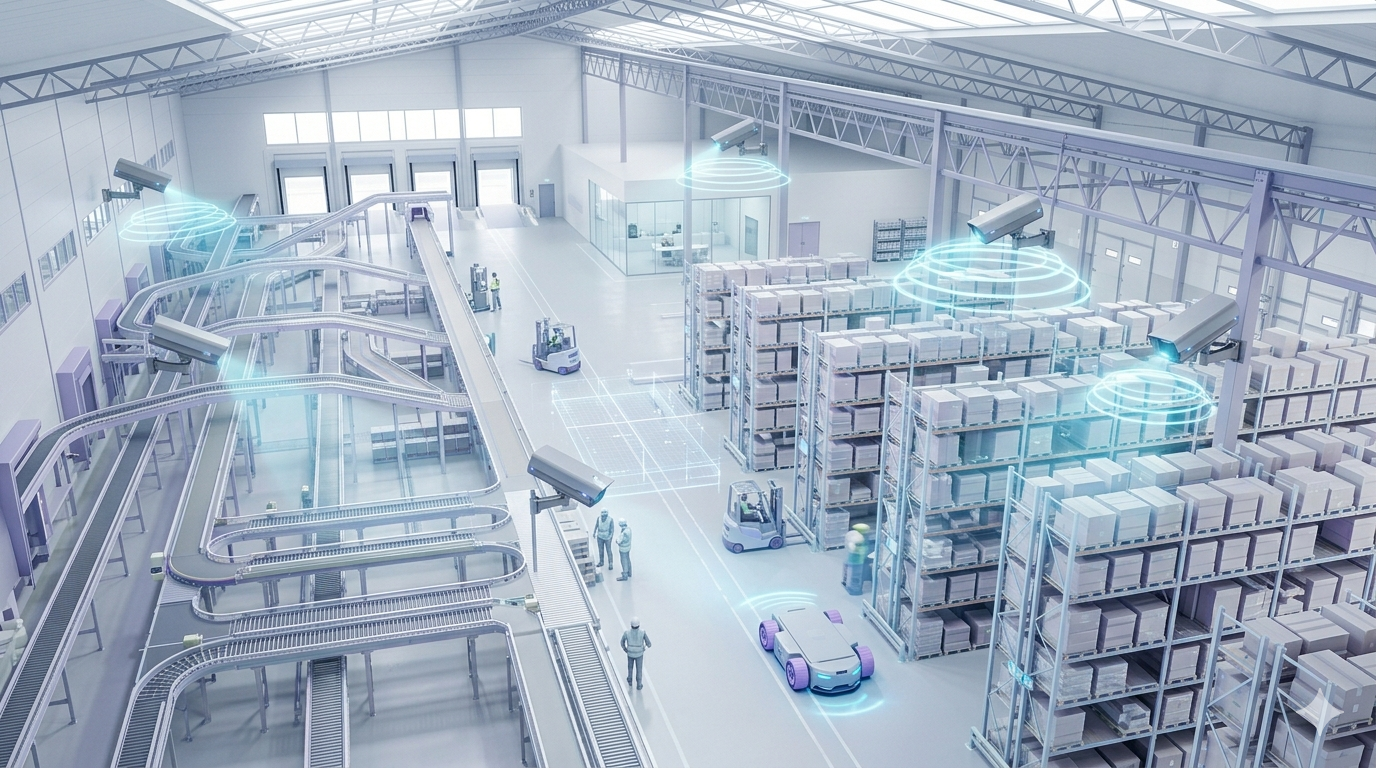
Video analytics in India in 2026 refers to software that applies artificial intelligence and computer vision to existing CCTV or IP camera feeds to extract real-time business intelligence — not just record footage. Unlike legacy CCTV video analytics, modern platforms use deep-learning models to detect people, objects, behaviours, vehicles, and compliance events, then trigger automated actions.
In plainer terms: a camera used to be a recording device. AI video analytics turns it into a decision-making device.
The category sits at the intersection of three adjacent markets — video analytics software, AI security analytics, and intelligent video analytics. Indian vendors, global platforms, and agentic-AI startups are all converging on a single outcome: turning passive surveillance into autonomous action.
Why CCTV Video Analytics Needed to Become AI Video Analytics
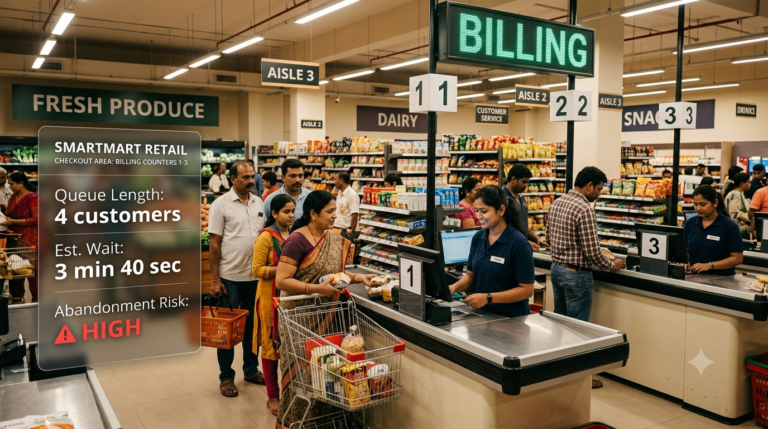
Traditional CCTV video analytics was built for a world with small operations and small networks of cameras. A single security guard watched a wall of monitors. An incident happened. Someone reviewed the footage afterwards. That model collapses at scale.
Today, an Indian enterprise might operate 200 retail outlets, 800 bank branches, or 50 warehouses. Watching every feed is impossible. Reviewing footage after the fact is expensive and largely pointless — the incident has already happened. Legacy video monitoring systems produce more data than any human team can process.
That’s the gap AI video analytics fills. Instead of storing footage and hoping someone notices the important frames, AI surveillance software actively evaluates every frame in real time and only surfaces what matters, to the person who can act on it.
The business effect of this shift is substantial. According to NASSCOM, the Indian AI market is growing at roughly 25–35% CAGR, with enterprise vision applications among the fastest-scaling segments. Video analytics in India is riding that wave — but the platforms winning deals in 2026 all have one thing in common: they act, they don’t just observe. For a closer look at how this plays out in financial services, see our deep-dive on autonomous incident response in Indian banking.
How AI Video Analytics Works: Detect → Decide → Act
The core engine of modern AI video analytics in India is a six-step loop that runs entirely without a human in the middle:
Detect → Classify → Route → Alert → Log → Resolve
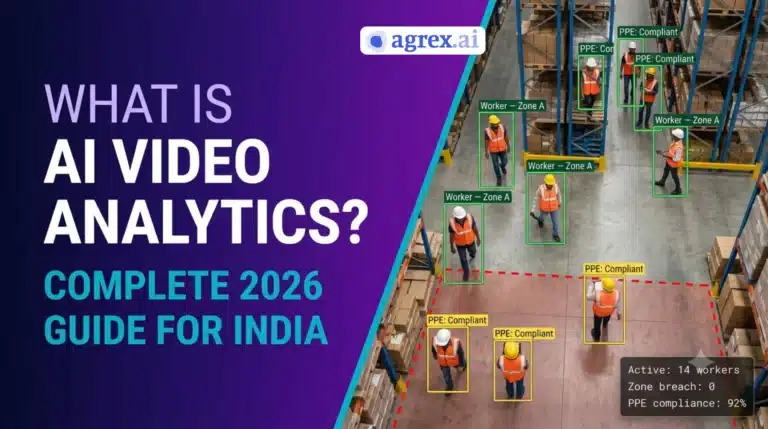
1. Detect. Deep-learning models analyse live RTSP feeds and identify events — a person entering a restricted zone, an unattended bag, a vehicle at the gate, a missing safety item, a crowd forming in a space that shouldn’t have one.
2. Classify. The system scores severity. A person lingering near an ATM for 30 seconds is different from one lingering for 3 minutes. Good AI analytics for security cameras does not fire an alert for every frame of motion — it fires when context says it matters.
3. Route. The system looks up ownership. Zone 4B has a supervisor. That supervisor has a preferred channel — WhatsApp, email, dashboard, or a mobile push. The alert goes to the right person, not everyone.
4. Alert. A notification is delivered with the footage clip, timestamp, zone, and severity. The alert is actionable — it contains everything needed to respond without opening a separate system.
5. Log. Every alert becomes a tracked event. It stays open until someone marks it resolved, so “acknowledged but not acted on” can’t hide.
6. Resolve. If the alert isn’t acknowledged within a defined window, it escalates up the chain automatically. No incident gets orphaned.
This is what separates intelligent video analytics from the older generation of passive platforms. Detection is table stakes. The loop is the product. A good example of the full loop in action — detect → classify → route — is covered in our breakdown of AI video analytics for ATM security.
9 Must-Have Capabilities in a Modern Video Analytics Platform
If you’re evaluating video analytics software in 2026, here are nine non-negotiables. Every mature AI video analytics platform should offer all of them.
1. Hardware-Agnostic Deployment
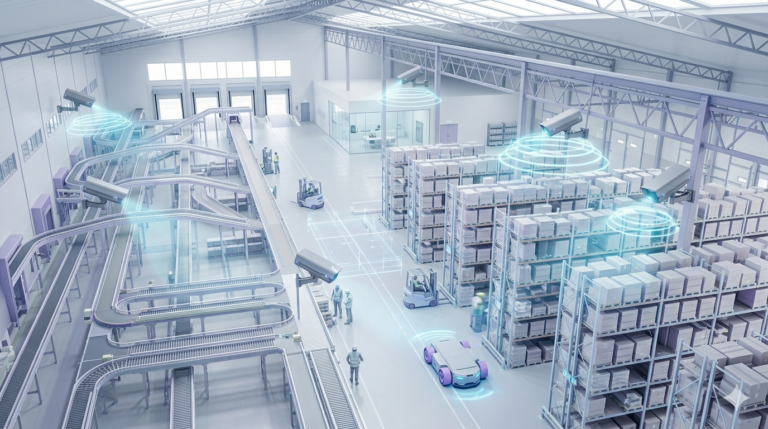
The platform must run on your existing IP cameras, NVRs, and VMS (Milestone, Genetec, Hikvision, Dahua, CP Plus). Any video monitoring system that requires hardware replacement is asking you to pay twice.
2. Real-Time Event Detection at the Edge or Cloud
Sub-second analysis of live RTSP feeds. Detection accuracy above 95% on common object and behaviour classes is the 2026 baseline.
3. Agentic Alert Routing
The platform must know who owns which zone, which shift, which role — and route alerts accordingly. This is the single biggest leap from legacy CCTV video analytics to AI surveillance software.
4. Escalation Logic
Unacknowledged alerts escalate automatically. This is what makes the system trustworthy at scale.
5. Resolution Tracking
Every alert stays open until confirmed resolved. This closes the gap between “detected” and “actually fixed” — the single most important metric in AI compliance monitoring.
6. Auto-Generated Reports
Shift, zone, and compliance reports produced without human data entry. Audit-ready by default.
7. Integration With Operational Systems
WMS, ERP, branch ops platforms, WhatsApp Business, ticketing systems. A good AI video analytics platform is a node in your operations graph, not an island.
8. Configurable Rules Per Zone
Different zones, different rules. A vault has different compliance requirements than a visitor lobby. Strong video analytics software supports zone-level configuration without needing an engineer.
9. Searchable, Tamper-Proof Event Log
Every event searchable by date, zone, severity, resolution status. This is the foundation of credible security incident management and regulatory audit trails.
Intelligent Video Analytics vs. Legacy Video Monitoring Systems
Here’s the practical difference between a legacy video monitoring system and a modern intelligent video analytics platform:
| Dimension | Legacy CCTV Video Analytics | Modern AI Video Analytics in India |
|---|---|---|
| Primary Function | Record and display | Detect, decide, act |
| Response Time | Hours to days (post-incident review) | Under 90 seconds (autonomous) |
| Alert Routing | Single dashboard, manual triage | Role/zone-based, automatic |
| Escalation | Manual, informal | Built-in, auto-escalating |
| Reports | Manual compilation | Auto-generated, audit-ready |
| Scale | Breaks past 20–30 cameras | Runs across 10,000+ cameras |
| Hardware | Proprietary, often replaced | Runs on existing cameras |
The switch from a legacy video monitoring system to AI video analytics in India is rarely a feature upgrade — it’s a change in what the system fundamentally does.
AI Compliance Monitoring, Fraud Detection & Security Incident Management
Three high-intent use cases dominate AI video analytics deployments in India today. All three share the same underlying loop, applied to different data.
AI Compliance Monitoring
AI compliance monitoring uses video analytics to check whether people, processes, and zones are following defined rules in real time. Missing PPE, unauthorised access, expired signage, uncleaned areas — the system spots the violation, alerts the owner, and logs the event for audit. This is where the best compliance management solutions are now being built on top of existing cameras rather than separate audit systems.
Fraud Detection System
A modern video-powered fraud detection system goes beyond transaction-level fraud analytics and watches the physical environment. Skimming-pattern behaviour at ATMs, unusual crowd formations in cash-handling zones, tampering at point-of-sale terminals — physical-world fraud signals that traditional AI security analytics tools miss entirely.
Security Incident Management
The strongest security incident management platforms now embed AI analytics for security cameras as the front door: detection and classification happen at the camera layer; routing, resolution, and escalation happen in the incident platform. Every incident has a footage clip attached by default, so investigation starts with evidence, not a phone call.
How to Choose Video Analytics Software in India
If you’re buying video analytics software this year, use this four-filter checklist:
Filter 1 — Deployment. Does it run on your existing cameras, or does the vendor want you to rip and replace? If it’s the second, walk away. Modern AI video analytics in India is hardware-agnostic by default.
Filter 2 — Loop closure. Does it just detect, or does it route + escalate + resolve? Dashboards are not a product. Action is.
Filter 3 — Indian market fit. Does the pricing model work for a 50-site or 500-site rollout in India, not just a US-style enterprise deployment? Does it have examples of scaled Indian deployments?
Filter 4 — Audit trail. Does every alert become a searchable event? Does every event have footage attached? Is the log tamper-proof? These determine whether the platform holds up in compliance reviews and legal proceedings.
Anything that fails two or more of these filters isn’t ready for production in 2026.
The ROI of AI Video Analytics in India
The commercial case for video analytics in India has become straightforward. Across operational deployments we’ve seen in the market, four ROI patterns show up consistently:
- Response time collapse. Alert-to-action windows drop from 4–8 hours to under 90 seconds. Prevented incidents replace documented ones.
- Labour reallocation. Manual monitoring is eliminated. Security and operations teams move from routine observation to exception handling — more value per head.
- Compliance lift. In process-heavy environments, compliance rates climb by 20–30 percentage points within 60 days of a closed-loop deployment.
- Incident cost reduction. The compounding effect — prevented fraud, prevented violations, reduced shrinkage — typically delivers payback in 3–6 months.
None of this comes from “better detection”. Detection is table stakes. The ROI comes from closing the loop — from the fact that AI surveillance software now decides and acts, not just watches. For a concrete view of these numbers in a different vertical, see our breakdown of AI video analytics for warehouse safety.
The Future of Video Analytics in India
Three trends will define video analytics in India over the next 24 months:
Agentic AI. Systems that don’t just alert but initiate multi-step workflows — open a ticket, notify the supervisor, update the compliance log, and follow up 30 minutes later if the issue isn’t closed. The product is moving from AI that answers to AI that executes.
Multimodal context. Combining video with audio, access-control data, POS data, and IoT sensors. A better signal from better inputs. Expect intelligent video analytics to merge with operational data platforms over the next two years.
On-device intelligence. Edge AI running inside the camera or a small on-site appliance, with only the metadata crossing the network. Lower bandwidth costs, better privacy posture, regulatory-friendly.
The through-line: AI video analytics stops looking like “software for reviewing footage” and starts looking like infrastructure for operations.
Frequently Asked Questions
What is video analytics in India?
Video analytics in India refers to software that applies AI and computer vision to existing CCTV or IP camera feeds to extract real-time insights, detect events, and trigger automated actions — replacing the traditional model of passive recording and manual review.
What is the difference between CCTV video analytics and AI video analytics?
Legacy CCTV video analytics focuses on recording and motion-based alerts. AI video analytics applies deep-learning models to understand context, detect specific events, route alerts to the right person, and close the incident loop autonomously. The shift is from “record and review” to “detect and act”.
Do I need to replace my cameras to deploy AI video analytics in India?
No. Modern video analytics software is hardware-agnostic and connects to existing IP cameras, NVRs, and VMS platforms via RTSP. Any vendor that requires hardware replacement is typically selling legacy technology.
How accurate is AI video analytics software in 2026?
Mature AI video analytics platforms deliver 95%+ detection accuracy on common objects and behaviours, with false positive rates under 5%. Accuracy varies by use case — common classes like people, vehicles, and PPE items are the most reliable.
How is AI video analytics used for AI compliance monitoring?
AI compliance monitoring uses video analytics to verify whether people and processes follow defined rules in real time — PPE checks, zone adherence, cleaning frequency, unauthorised access. Violations trigger automatic alerts to the zone owner and get logged for audit.
Can AI video analytics work as a fraud detection system?
Yes. Video-powered fraud detection systems identify physical-world fraud indicators — ATM skimming patterns, tampering at POS terminals, unusual crowd behaviour in cash-handling zones — signals that transaction-level fraud analytics cannot see.
What is intelligent video analytics?
Intelligent video analytics is AI video analytics that goes beyond detection — it classifies events, routes alerts to the correct owner, escalates unacknowledged alerts automatically, and logs every incident to resolution. The “intelligence” is in the full loop, not just the detection model.
What ROI can I expect from AI video analytics in India?
Typical ROI lands in the 3–6 month range. Operators see 30% operational cost savings on average, alert response times dropping from hours to under 90 seconds, and compliance rates rising by 20–30 percentage points within 60 days of deployment.
See AI Video Analytics Running on Your Existing Cameras
Agrex.ai is an agentic AI video analytics platform built for Indian operations — hardware-agnostic, deployed across 50+ sites in under 30 days, closed-loop from detection to resolution.
Looking to learn more about video analytics in India, intelligent video analytics, or AI surveillance software? Head to the Agrex.ai homepage for product details, customer stories, and a working demo of agentic video analytics on live cameras.