Your cameras are watching. But are they thinking? Most businesses running CCTV today are operating with the same core logic that existed a decade ago: a camera records, software flags something, and a human decides what to do. The technology looks modern. The underlying workflow isn't. Agentic AI is changing that — and it's changing it fast. In this post, we break down what agentic AI actually means, how it applies to video analytics specifically, and why the gap between a traditional system and an agentic one is far larger than most people realise.
What Does Your CCTV System Actually Do Today?
Let’s be specific.
A traditional CCTV setup records footage. If you’re using basic Video analytics software, it can detect objects (a person, a vehicle, a package) and send an alert when a rule is triggered — motion in a restricted zone, someone crossing a line, a door left open.
That’s useful. But it stops there.
The alert arrives. A human reads it. The human decides whether it’s real. The human acts on it — or doesn’t. The system played no role in what happened next.
This is reactive intelligence. Detect, then wait. The camera saw something. The rest was up to you.
For most organisations running on this model in 2026, the result is alert fatigue, slow response times, and a surveillance infrastructure that’s generating data nobody is fully using.
What Is Agentic AI?
Agentic AI refers to AI systems that don’t just recognise, they reason, decide, and act.
Where traditional AI models respond to a single prompt or input, an agentic AI system operates with a degree of autonomy across a workflow. It can:
- Perceive a situation in context (not just detect an object, but understand what’s happening)
- Plan a response based on defined goals and priorities
- Execute actions — sending alerts, logging incidents, escalating to the right person
- Evaluate outcomes and adjust behaviour over time
The key difference is the loop. A standard AI detects and stops. An agentic AI detects, decides, and closes the loop — without waiting for a human to bridge the gap between observation and action.
This is why agentic AI is one of the fastest-growing areas in enterprise technology right now. It doesn’t replace human judgment on complex decisions — it removes the manual overhead on the hundreds of smaller decisions that slow operations down every day.
What Is Agentic AI in Video Analytics?
Applied to video analytics, agentic AI means your surveillance infrastructure becomes an active operational layer — not just a passive recording system. Here's what that looks like in practice:
Traditional AI Video Analytics
Agentic AI Video Analytics
Same camera. Same detection. Completely different operational outcome.
How Agentic AI Differs from Traditional Video Analytics
| Capability | Traditional Video Analytics | Agentic AI Video Analytics |
|---|---|---|
| Detection | Object & motion-based triggers | ✓ Context-aware, behaviour-based |
| Alerts | Rule-triggered, high volume, generic | ✓ Prioritised, pre-contextualised, actionable |
| Response | ✗ Fully human-dependent | ✓ Automated routing with human escalation |
| Learning | ✗ Static rules, manual updates | ✓ Adapts over time from patterns |
| Setup & Config | ✗ Requires constant IT involvement | ✓ Self-configurable by operations teams |
| Output | A notification — nothing more | ✓ End-to-end incident closure |
| Multi-site Intelligence | ✗ Siloed per camera/feed | ✓ Unified view across all sites |
Where Agentic AI in Video Analytics Is Making the Biggest Difference
Retail
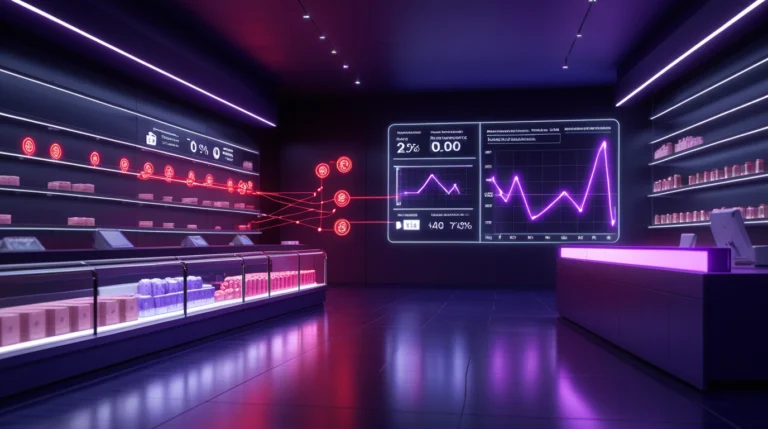
In a retail environment, AI video analytics powered by agentic systems can detect a queue building at checkout, cross-reference against staffing schedules, and trigger a notification to the floor manager — all before a customer complaint is made. It can also flag unusual behaviour patterns near high-value sections and escalate automatically based on dwell time and proximity rules.
→ See how Agrex AI's retail video analytics works in multi-store environments.
Logistics & Warehousing
Agentic AI in logistics means vehicle turnaround anomalies get flagged in real time — not on next morning's report. Loading zone compliance, entry/exit patterns, and restricted area breaches are monitored continuously, with workflows that notify the right operations lead the moment something deviates from baseline.
→ Learn more about logistics video analytics and how it handles fleet and dock operations.
Manufacturing
On the shop floor, agentic systems monitor PPE compliance, machine zone access, and SOP adherence simultaneously across multiple feeds. A non-compliance event doesn't just generate an alert — it triggers a documented incident, timestamps it, and routes it to the line supervisor within seconds.
→ Explore Agrex AI's approach to SOP compliance monitoring in manufacturing.
Security Operations
For security teams managing multi-site operations, the compounding effect of agentic intelligent video analytics is significant. Instead of monitoring dozens of feeds manually, operators receive structured, prioritised incident reports — with the context, clip, and recommended action already assembled.
→ See how security video analytics works for enterprise deployments.
What to Look for in an Agentic AI Video Analytics Platform
If you’re evaluating platforms, these are the capabilities that separate a genuinely agentic system from one that’s just using the word:
- Context-awareness, not just detection The system should understand what’s happening — not just what it sees. Time of day, zone type, historical patterns, and user roles should all factor into how an alert is generated and routed.
- Closed-loop incident management From detection to logging to escalation — the system should handle the full workflow, not just the first step.
- Self-configurable operations A good Video analytics software platform shouldn’t require your IT team to rewrite rules every time your operations change. Configuration should be accessible and intuitive for operational teams.
- Multi-feed, multi-site intelligence Agentic AI should work across your entire infrastructure, not just individual cameras — with a unified view of incidents and patterns across locations.
- Audit-ready output Every action the system takes should be logged, timestamped, and retrievable. This matters for compliance, insurance, and operational accountability.
The Bottom Line
The CCTV systems most businesses are running today were designed for a world where human attention was the bottleneck, and the camera’s job was to give humans something to look at.
Agentic AI inverts that model. The camera’s job is no longer to show you what happened. It’s to handle what needs to happen next.
For operations teams managing large facilities, multiple sites, or high-compliance environments, that shift isn’t a feature upgrade. It’s a fundamental change in what your surveillance infrastructure is capable of.
If you want to see what agentic AI video analytics looks like in practice, across retail, logistics, manufacturing, and security, talk to the Agrex AI team.
See how Agrex AI uses agentic intelligence to turn your existing cameras into a system that detects, decides, and acts , without waiting on your team.
Book a free demo at Agrexai.com →Frequently Asked Questions
Everything you need to know about Agentic AI and AI video analytics