Why Traditional CCTV Is Costing Enterprise Operations Teams More Than They Realize
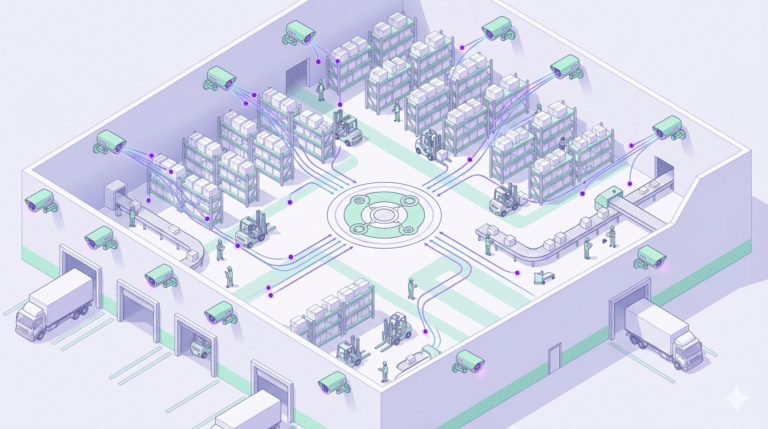
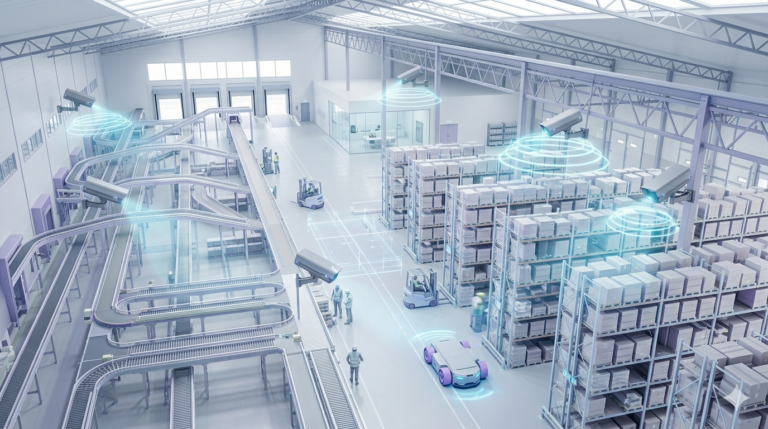
It was a Tuesday morning when a COO at a large retail chain in Delhi discovered that ₹4 lakh worth of inventory had walked out of a warehouse — a failure that intelligent video analytics would have caught in real time. The CCTV cameras were working. The footage was there. But nobody had been watching. By the time the security team reviewed the recordings, the damage was done, the trail was cold, and the loss was written off.
This is not an isolated story. Across India’s multi-location enterprises — retail chains, QSR networks, manufacturing plants, logistics hubs — traditional CCTV continues to operate as a recording tool, not a protection system. The shift to Intelligent video analytics and Video analytics AI is no longer a future investment. For operations teams managing 10, 50, or 200 locations, it is the difference between knowing what’s happening and finding out too late.
Agrex AI works with 100+ enterprises across India to make that shift — without replacing existing cameras or overhauling infrastructure. This blog breaks down exactly where traditional CCTV is bleeding your operations budget, and what leading enterprise teams are doing differently.
What Are the Hidden Costs of Traditional CCTV Systems?
Traditional CCTV creates the illusion of security. Cameras are installed, footage is recorded, and operations teams assume they’re covered. The real cost only becomes visible when something goes wrong — and by then, it’s too late to recover.
Enterprises with 10+ locations typically spend 300–500 man-hours per month on manual CCTV review and monitoring. That’s not security — that’s overhead. Here’s where the cost accumulates with traditional CCTV video analytics-free setups:
- Manual monitoring labor: Dedicated operators watching multiple feeds simultaneously. Human attention degrades after 20 minutes — meaning your team misses more than they catch.
- False alert fatigue: Without AI filtering, every shadow, lighting change, or stray animal triggers an alert. Teams stop responding — and real incidents go unnoticed.
- Zero actionable data: Traditional CCTV records but does not analyze. There are no heatmaps, no compliance reports, no SOP tracking — just hours of raw footage nobody has time to review.
- Missed incident costs: Every undetected theft, every SOP violation, every compliance breach adds up. The cost of missing incidents far exceeds the cost of the monitoring system itself.
Camera downtime blind spots: When a camera fails, nobody knows until a post-incident review. Facilities go unprotected for days — sometimes weeks.
📊 According to MarketsandMarkets, the global video analytics market is projected to reach USD 21.5 billion by 2027. Yet enterprises with 10+ locations still spend an estimated ₹8–15 lakh per year on CCTV-related manpower alone — before accounting for a single missed incident.
How Does Traditional CCTV Fail Enterprise Operations Teams?
Your team is not watching — they are reviewing. That is the fundamental failure of traditional CCTV for enterprise operations. It is a reactive tool in a business environment that demands proactive control.
Here is how legacy surveillance fails at scale:
Reactive, not proactive: Traditional CCTV only provides value after something has already happened. By the time footage is pulled and reviewed, the loss has occurred, the employee has left, or the compliance violation has repeated itself 40 times across your locations.
No analytics layer: Without an embedded intelligence layer, cameras generate data that nobody uses. There is no way to identify patterns, track SOPs, or measure staff behavior across locations from a single dashboard.
Compliance gaps: In manufacturing and QSR environments, compliance is not optional. PPE violations, hygiene breaches, and safety SOP misses carry regulatory and financial consequences. Traditional CCTV cannot track these in real time — making Security incident management entirely reactive and manual.
Scalability failure: Managing 5 locations with CCTV is hard. Managing 50 is operationally broken. Each location becomes a silo. There is no centralized visibility, no standardized reporting, and no way to benchmark performance across sites.
Blind spots by design: Fixed cameras with no intelligence layer have no way to flag when they’re obstructed, angled incorrectly, or simply offline. Your coverage map on paper looks complete. Your actual coverage often isn’t.
What Is the Real Cost of a Single Missed Security Incident?
The question most operations heads never ask is: what does one missed incident actually cost? Not in terms of CCTV footage — but in hard operational losses.
🔴 1 undetected theft in a warehouse = ₹50,000–₹4,00,000 in direct inventory loss + investigation time + insurance complications
🔴 1 PPE compliance miss in a manufacturing plant = potential ₹2–10 lakh in regulatory fines + operational shutdown risk + reputational damage
🔴 1 SOP violation in a QSR kitchen (food hygiene, temp breach) = health inspection risk + brand damage across the entire franchise network
Multiply these numbers across 20, 50, or 100 locations. Multiply them across 12 months. The cost of a traditional CCTV system that records but doesn’t respond is not ₹3 lakh in hardware — it is ₹3 crore in untracked operational losses.
This is the true ROI calculation that enterprise COOs are beginning to make. Not “how much does this system cost?” but “how much is the absence of intelligence costing us every month?”
Traditional CCTV vs Agrex AI — ROI Comparison
| Feature | Traditional CCTV | Agrex AI — Intelligent Video Analytics |
|---|---|---|
| Real-time alerts | ✗ No | ✓ Yes — instant AI detection |
| Actionable data | ✗ None | ✓ AI-analyzed operational insights |
| Compliance monitoring | ✗ Manual review only | ✓ Automated reports — PPE, SOP, hygiene |
| Multi-location scalability | ✗ Siloed, complex | ✓ Single centralized dashboard |
| Manpower required | High — dedicated monitoring team | Minimal — AI handles detection |
| Incident response time | Hours (post-incident review) | Minutes (real-time alert) |
| Monthly cost of misses | High — untracked and compounding | Significantly reduced |
| Hardware replacement needed | N/A | ✓ Works with existing cameras |
How Do Leading Enterprises Use AI Surveillance Software Instead?
The enterprises that have moved beyond traditional CCTV are not doing so by ripping out infrastructure and starting over. They are adding an intelligence layer on top of what they already have — and the results are measurable.
Agrex AI is trusted by 100+ enterprises across India, including Domino’s, Bata, Suzuki, and Xpressbees. What changed for these organizations was not the number of cameras — it was what those cameras could now do.
Xpressbees reduced monitoring costs by 62% after deploying Agrex AI across their logistics network. The same camera infrastructure, the same locations — but now with real-time AI detection, automated alerts, and centralized visibility replacing a manual monitoring team that was stretched thin across facilities.
Suzuki achieved 91% PPE compliance at their manufacturing facilities — a metric that was simply unmeasurable under a traditional CCTV setup. AI-powered detection flags every violation the moment it occurs, not three days later during a footage review.
How Agrex AI’s Ai surveillance software works in practice:
- Connects directly to existing CCTV cameras — no new hardware investment required
- Live multi-location dashboard — full visibility across all sites from one screen
- Real-time AI alerts — incidents flagged and routed to the right team member instantly
- WhatsApp and mobile notifications — operations heads receive alerts wherever they are
- AI chatbot for incident queries — ask questions about what happened, when, and where
- Automated compliance reports — PPE, SOP, hygiene tracking with zero manual effort
For Domino’s and Bata, the result was 60% faster incident response — not because their teams got faster, but because they stopped reviewing and started responding in real time.
What Should Enterprise Operations Teams Look for in an Intelligent Video Analytics System?
If your operations team is evaluating a move from traditional CCTV to Intelligent video analytics, here is a practical checklist. Any platform you consider should clear all seven of these criteria:
- Real-time alerting: Incidents must be flagged the moment they occur — not surfaced in a morning report.
- Multi-location centralized dashboard: A single view across all your facilities. No switching between systems, no siloed reporting.
- No hardware replacement required: The platform must connect to your existing camera infrastructure. Any vendor requiring full hardware replacement should be a red flag.
- Role-based access control: Your warehouse manager should see their site. Your COO should see everything. Access must be structured by role and location.
- Automated compliance reporting: PPE, SOP, hygiene — these must be tracked automatically and reported without manual input.
- WhatsApp and mobile alerts: Your operations heads are not sitting at a desk. Alerts need to reach them wherever they are, instantly.
- AI-powered anomaly detection: The system must learn what normal looks like at each location — and flag deviations automatically, without requiring manual rule-setting for every scenario.
Agrex AI meets all seven. Explore video analytics ai built specifically for Indian enterprise operations — retail, QSR, manufacturing, and logistics.
Conclusion
Every month your enterprise continues running on traditional CCTV is a month of untracked losses, missed incidents, and compounding manpower costs. The cameras are not the problem — the absence of intelligence behind them is.
In 2026, India’s leading enterprise operations teams are not debating whether to upgrade. They are measuring how fast they can. The transition to Intelligent video analytics is not a technology decision — it is an operational and financial one.
Last updated: February 2026
See how Agrex AI helps enterprise operations teams cut monitoring costs and respond to incidents in real time.
Book a free demo at Agrexai→Frequently Asked Questions
Everything you need to know about AI video analytics and intelligent surveillance.